
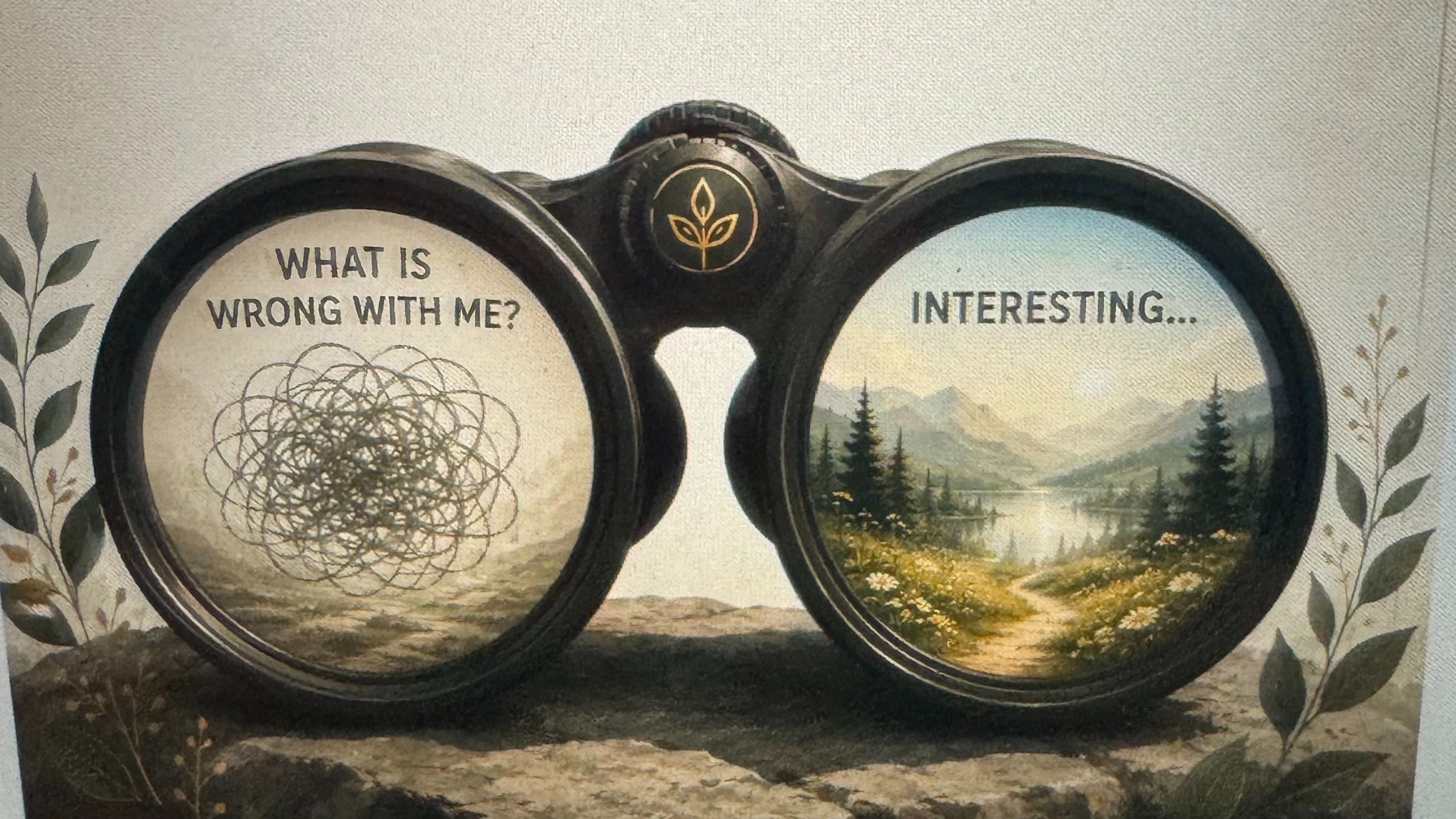
"To observe without evaluating is the highest form of intelligence."
- Jiddu Krishnamurti
You know those moments…. the ones where you have been talking about a topic and you ASSUME that everyone knows exactly what you mean? Only to find out that you have just been confusing everyone instead? Or even worse, that you have been making life harder for people in a way you didn’t consider?
I host weekly meetings for The SOS Collective, an international online women’s recovery community. I don’t remember the last time I hosted a meeting where I didn’t encourage using curiosity as a tool for understanding addiction from a different perspective. What are your triggers? When do they happen? Who are you with? What are you doing? What could you do differently?
I also suggest using curiosity to understand other aspects of your life. Curiosity to NOTICE your life so that you can make more conscious choices.
Recently someone shared that the concept of curiosity was frustrating. Leading to a feeling of “Am I not asking the right questions?” Followed by, “What is wrong with me?” I do agree that curiosity can feel a little like the phrase of the day. Similar in nature to “practice mindfulness” or “love yourself”.
But…. when you feel like the word curious is one that you have used your entire life, yet you can’t seem to figure out what “getting curious” really means, the practice of getting curious can slip ever so subtly into rumination. And, if someone is already exhausted by their life and all the work they are doing, “just get curious” can sound like, “Great. Another thing I am doing wrong?”
What does it mean to get curious?
Curiosity is not thinking harder. That is the misunderstanding. Most people hear curiosity as, "Analyze yourself until you find the answer." THAT is rumination. Real curiosity is much quieter. It is observation before interpretation. In other words, we need to learn to notice first. Curiosity comes second.
Rumination is asking questions that are self-focused but not helpful. Why am I like this? What's wrong with me? Why can't I fix this? When will I finally change? What if this never gets better? Rumination is trying to solve yourself. It circles. It narrows. It judges. It assumes there is a right answer hiding somewhere if we just think long enough. If we just ask the RIGHT questions.
Neurologically, rumination tends to keep the brain's default mode network (DMN) highly engaged. The DMN spends its time replaying the past, imagining the future, and constructing stories about us. It's a useful network, but when it gets "stuck," it becomes repetitive and self-focused rather than insightful. Rumination can often lead to increased anxiety and depression.
Curiosity, however, leads to questions that invite further investigation. We think, “Interesting….” And then ask follow-up questions. What just happened? What am I noticing? What am I feeling in my body? What story am I telling myself? What am I protecting? What would happen if I didn't immediately believe this thought? What else could be true?
Curiosity is expansive. Rumination restricts our options. Curiosity gathers information. Rumination tries to force certainty.
When we are genuinely curious, several things happen. Curiosity recruits our attention networks rather than just self-referential networks. Our prefrontal cortex becomes more engaged. We become more receptive to learning. The brain becomes less defensive. Curiosity increases activity in the hippocampus, which helps us learn and remember, and activates dopamine-related circuits that make exploration feel rewarding rather than threatening.
Rumination asks the brain to defend. Curiosity asks the brain to discover. Those are two completely different states.
In addition, it is challenging for two competing states to exist at the same time. Judgment and curiosity, for example, are often opposing sides of the same coin. When we sit in judgment it is hard to get curious. When we are curious, it is almost impossible to be judgmental. The same holds true for fear or anxiety or frustration,
Genuine curiosity changes your relationship to your emotions. The emotions may still be present, but they are no longer driving the bus. That distinction is important.
Your brain can only allocate so much attention at one time. While emotions and cognition can seemingly coexist, your thoughts about your experience changes everything. When you're ruminating, your attention is fused with the emotion. "I am anxious." "I am failing." “Something is wrong with me." Emotion becomes the lens through which you interpret reality.
When you're genuinely curious, something shifts. Instead of being the emotion, you're observing it. "I notice anxiety." "I wonder what triggered that." "That's interesting." Those tiny shifts create psychological distance. An ability to see thoughts as thoughts rather than absolute truths. Observing an emotion with openness reduces its intensity over time, not because you're suppressing it, but because you're no longer feeding it.
Curiosity and judgment cannot occupy center stage together. Judgment fuels, “I already know.” Curiosity helps us move to, “I might not.” Judgment closes the case. Curiosity reopens the investigation. One says "verdict." The other says "evidence." You can't be deeply committed to both at the exact same moment.
Fear also changes. Fear wants certainty. Curiosity tolerates uncertainty. Fear asks, "What if something terrible happens?" Curiosity asks, "I wonder what will happen." The future hasn't changed. Only your expectation of it has.
Curiosity feels peaceful. Not because all your problems disappear. But because curiosity removes the urgency. Rumination says, I need an answer. Curiosity says, I need another observation. That is a much lighter burden.
In thinking about how I discuss this topic, maybe I need to also shift away from curiosity. At least as the first step. It is still a very important tool, but perhaps the first step is not curiosity, but NOTICE. A logical progression might look like:
Notice → Pause → Curiosity → Choice
Notice without judgment. Pause without rushing to solve. Then get curious. Ask one question, not twenty, that might help you see the situation differently. Something simple. What am I noticing right now? That question is so much gentler than, “Why am I always this way?” Or “Why can’t I figure this out?”
Once you have noticed and paused and gotten curious, then you can consciously choose what the next right step will be. You have given yourself space to respond intentionally and authentically.
Curiosity is not asking better questions so you can find yourself faster. Curiosity is learning to stand beside yourself long enough that you stop needing immediate answers. Curiosity is not thinking harder, it is thinking differently. It is stepping away from rumination.
So, I will change my conversation from “get curious” to “notice.” Notice is a verb. It requires no expertise, no enlightenment, no perfect mindset. It is simply the willingness to look before you label. And from that place, curiosity is not something you manufacture, it is something that naturally follows.
Much Love,
Lisa
If you enjoyed this blog and believe someone else might enjoy it as well, please feel free to forward. If this was forwarded to you and you would like to hear more, please sign up below to receive future emails.
Lisa Hamil is a founding member and host for The SOS Collective, an online international women’s recovery and support group. However, this blog and any classes or coaching offered by Lisa Hamil LLC are separate from and not affiliated in any way with The SOS Collective.
Stay connected with news and updates!
Join our mailing list to receive the latest news and updates from our team.
Don't worry, your information will not be shared.
We hate SPAM. We will never sell your information, for any reason.
