
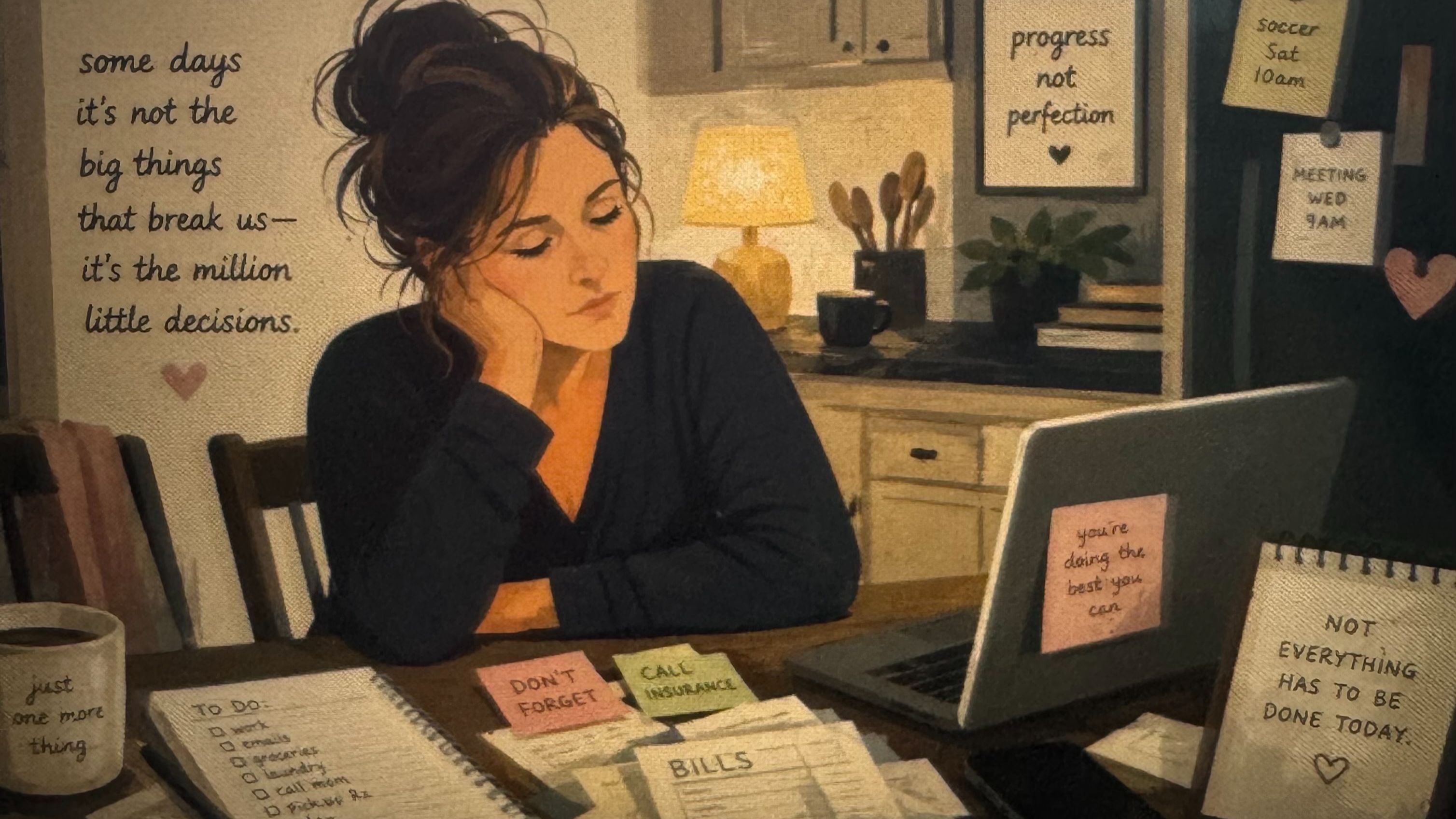
"Until you make the unconscious conscious, it will direct your life and you will call it fate."
— Carl Jung
I spent most of my life resisting the word “addiction.” Not because I didn’t struggle with alcohol. I did. Not because it wasn’t affecting my life. It was. But because that one word was a label I just couldn’t give myself.
Addiction to me was rock bottoms, interventions, lives falling apart. I had a career, paid my bills, raised my children. From the outside, everything appeared fine. And because I did not fit the story I had been told about addiction, I spent decades convincing myself that I wasn’t “that bad.”
Looking back, I wonder if I was asking the wrong question. Perhaps the better question than, “Am I addicted?”, would have been “What am I trying to relieve?” Before I go any further, I want to be very clear…. addiction is dangerous and harmful to people’s lives. It is not wrong in any way to question whether you have an addiction that is impacting you. Yet, I must wonder if I had been given a different perspective, a different question, a different “label”, would I have sought help sooner?
I saw myself as functional. But what I failed to recognize was that "functional" meant I was managing not only the normal stresses of life, but also the additional burden of addiction. I believed alcohol was helping me cope, helping me manage the pressure, the responsibilities, and the emotions I didn't know what to do with. Looking back, I can see that the behavior I was struggling to change was never really about pleasure, despite how alcohol is marketed to us. It was about relief. Relief from stress, loneliness, uncertainty, responsibility, and the exhaustion of carrying one more thing. For a few hours, I didn't have to think so hard. I didn't have to feel so much.
Recently, I came across the concept of decision fatigue. Researchers have found that the quality of our decisions tend to decline as we make decision after decision throughout the day. As our mental energy decreases, we become more likely to avoid difficult choices, seek immediate gratification, procrastinate, or default to whatever requires the least effort.
In other words, we become tired. Not physically tired. But mentally tired. Emotionally tired.
Life requires SO many decisions. What to eat, wear, how to respond to an email, navigate a relationship, save or spend, stay or leave. Whether to speak up or stay silent. I personally must decide how to divide my time between the four different email accounts I have, and the roughly 10 different WhatsApp groups that I do my best to participate in. What about social media or the “must watch” shows everyone tells me about? Do I read or write, walk or weight-train, yoga or journaling, participate or check out?
There are only so many hours in a day. And, while each of these decisions may seem small, together they create a cognitive load that we carry without even realizing it. Estimates show that, on average, we are asked to make an astounding 35,000 decisions a day. And when we become exhausted by the weight of carrying our lives, we often seek relief.
I believe this is where most addiction begins. Not with a desire to destroy ourselves. Not with a lack of willpower, but with desire to simply feel better. To find relief. To stop thinking, carrying, deciding. But is that “addiction” as portrayed in the story I was told? Or is it a “numbing behavior” that has taken on a life of its own?
For a moment, we get to put down the burden. But the problem, of course, is that the relief is temporary. When we opt to check-out or numb, the stress remains, the decisions remain, and often new problems are added to the pile.
I have been playing around with a new definition. One for “numbing behavior”. A definition that, for me, is a better description of what I was trying to achieve.
Numbing behaviors are anything we repeatedly turn to for comfort, escape, reward, or relief and that ultimately harm us and leave us feeling powerless to stop. The substance or behavior may differ, but the pattern is the same: temporary soothing followed by consequences, shame, and the promise that next time will be different.
Often these behaviors begin as attempts to cope with discomfort, overwhelm, loneliness, uncertainty, or the exhaustion of carrying more than we know how to handle. Ironically, we often label them as “rewards” for getting through the day. Which makes giving them up even harder. They have been a symbolic badge of honor. A nod to our surviving another day.
Alcohol can be a numbing behavior. So can food, social media, excessive work or exercise. Drugs, cigarettes, shopping, sex, gambling. Or as Anna Lembke described in “Dopamine Nation” even romance novels. People, places, things, emotions, there are many behaviors we can participate in that may initially bring acknowledgment, relief, or simply distraction from all that is weighing us down. But when done at the expense of our soul…. well, that is what brings the shame and the blame and the lack of trust in ourselves.
The behavior itself is often less important that the role it is playing in our lives. What if we focus on the “why” of our actions. What discomfort is the behavior helping us avoid? What feeling is it helping us escape? What burden is it helping us put down?
This perspective is important because shame rarely creates lasting change. Curiosity does. When we label ourselves as weak, broken, lazy, or addicted, we often stop exploring. When we become curious, something changes. Instead of asking, “What’s wrong with me?”, maybe we need to ask, “What am I carrying that I need to set down?” This is a question that can open doors that shame keeps locked.
Again, none of this is meant to minimize addiction or its consequences. The damage caused by substances and compulsive behaviors is real. But perhaps understanding why we reach for them in the first place can help us approach ourselves with more honesty and compassion. Because most of us are carrying more than we realize. And many of us have become experts at finding ways to avoid feeling that weight.
So before asking whether you are addicted, perhaps start with a different question.
Are you exhausted?
Exhausted from carry expectations, responsibilities, old stories, unhealed wounds, impossible standards, and the constant pressure to please others and keep going no matter the cost. The answer is NOT more shame. It is not more willpower. Or more discipline.
The best answer may be simple awareness. Because awareness allows us to see the burdens we are carrying. Jung is correct in that until we make the unconscious, conscious, it WILL direct our life. Once we begin to see ourselves more clearly, we can begin deciding which parts are ours to keep. And what parts we need to let go.
Much Love,
Lisa
If you enjoyed this blog and believe someone else might enjoy it as well, please feel free to forward. If this was forwarded to you and you would like to hear more, please sign up below to receive future emails.
Lisa Hamil is a founding member and host for The SOS Collective, an online international women’s recovery and support group. However, this blog and any classes or coaching offered by Lisa Hamil LLC are separate from and not affiliated in any way with The SOS Collective.
Stay connected with news and updates!
Join our mailing list to receive the latest news and updates from our team.
Don't worry, your information will not be shared.
We hate SPAM. We will never sell your information, for any reason.
