
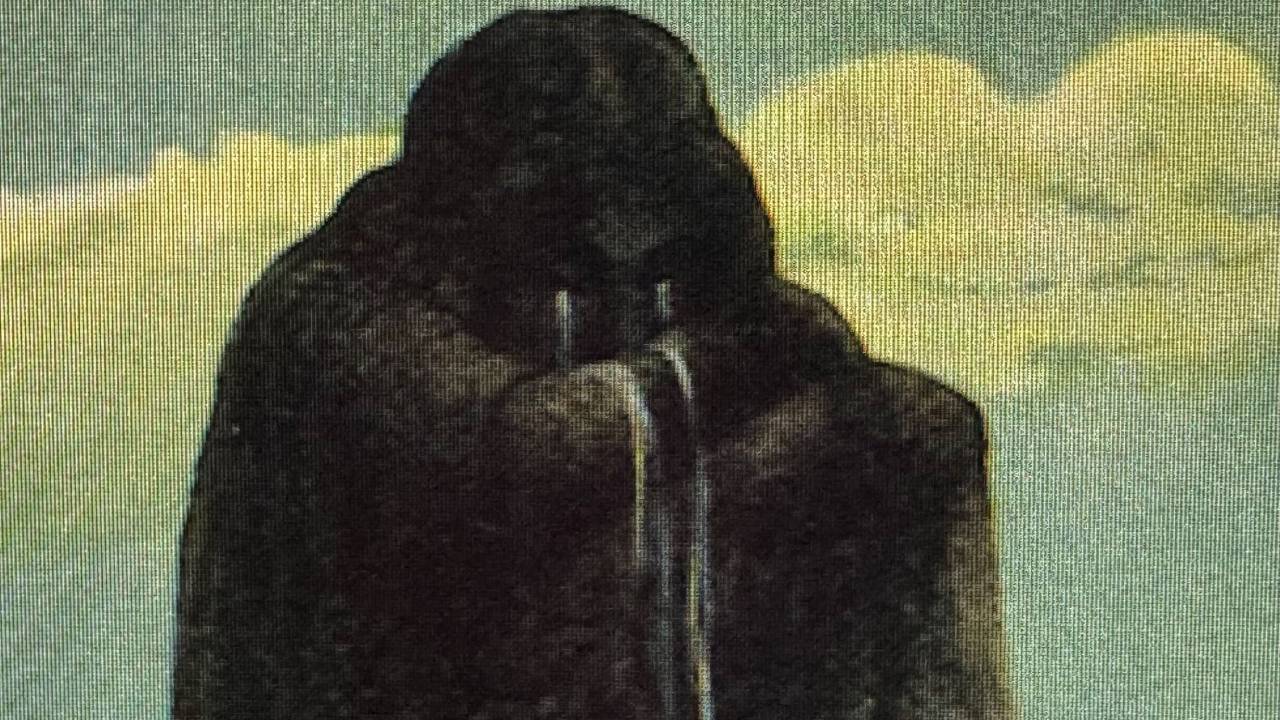
Niobe, by Artuš Scheiner (Bohemian/Czech, 1863–1938). In Logan Marshall, Myths and legends of all nations (Philadelphia, 1914). Image via Project Gutenberg.
Niobe was the Queen of Thebes, married to King Amphion. She was blessed, or so she believed, with many children. Most versions of her story say that she had fourteen; seven sons and seven daughters. In her abundance, she grew proud.
She boasted that she was superior to the goddess Leto, who only had two children, Apollo and Artemis. Niobe mocked Leto publicly, urging the people of Thebes to honor her instead of the goddess. However, in Greek myth, hubris, that excessive pride before the gods, never went unanswered.
Leto did not battle with Niobe herself. Instead, her divine children did. Apollo killed Niobe’s sons with his arrows. Artemis killed her daughters. One by one. The palace became silent as Niobe became witness to unbearable loss.
Overcome with grief, Niobe did not scream, fight or collapse, Instead, she turned to stone. The Greeks said she was carried to Mount Sipylus (in modern day Turkey), where a rock formation was believed to resemble a woman with tears flowing down her face. A natural spring dripping down the stone was said to be her eternal grief.
Niobe is often framed as a warning against arrogance, but she is more than a moral lesson. Her image is a stone formation with tears that continue to flow even when everything else has hardened. She turns to stone after loss, after humiliation, after the collapse of the identity she built her pride on. Her children were not just her children, they were her “proof”. Her abundance, her status, her visible evidence that she was blessed, superior, secure.
When they were gone, what remained? A body that could not move, a face that could not change, a surface fixed to the outside world, but tears that never stop.
Niobe represents what happens to so many of us when we are faced with grief, trauma, and loss, particularly an identity loss. We find that the world has shifted somehow and we are no longer sure of our place in it. When our identity collapses, shame is unbearable, or grief feels too dangerous to fully feel, we harden.
To the outside world, we become efficient, composed, capable, high functioning. We smile. We tell ourselves, “I’m fine.” “This is just how life is.” “It doesn’t matter.” “Other people have it worse.” Stone is protective. Stone doesn’t feel humiliation. Stone doesn’t risk being seen. Stone cannot be hurt again. But stone also cannot grow.
People often talk about hitting “rock bottom.” The seemingly lowest possible level or point a person can reach. A point where things cannot get any worse. It conjures a state of hopelessness but also a turning point, a point necessary to force some sort of positive change. A line in the sand.
What if you never reach “rock bottom” because you are too busy turning to stone? When I was drinking, I never hit that defining point. I never had a DUI, lost a job, a home, my children. That didn’t mean I wasn’t doing damage to those things, it just means I was lucky. Instead, I kept waiting for the other shoe to drop while telling myself that I was strong, capable, kept food on the table, kept showing up. Repeating that I didn’t need anything or anyone, I was the one who was keeping it all together. But with every glass of wine, I was turning to stone. Numbing out. Self-marbling.
Niobe is what happens when our story feels unchangeable. When the story we tell ourselves about who we are does not match what we know in our heart. When being strong and capable and in control brings about a grief, a dissatisfaction and a longing that leaks through as tears. The sadness we can’t explain, exhaustion that doesn’t make sense, moodiness after something small or the quiet ache in our heart that says, “Is this all there is?”
We don’t just harder toward others, we harden toward ourselves and we speak to ourselves in stone. “Get over it.” “You should be farther along.” “You chose this.” “Stop being dramatic.” But the tears, the mood shifts, the fatigue, the sudden grief, that is the body saying quietly, “I am still here.” Your heart whispering quietly to you that love, peace, tenderness and respect are what you need most.
It is easy to think that we must have a defining moment for us to see that change is needed. Maybe what we need to understand is that “rock bottom” can be a turning point, a swift and needed change in direction, but the more insidious thing that happens in our life is not the sudden or the extreme. It is the slow daily turning to stone. The daily dismissal of who we are, what we need. The daily numbing of our self until the only thing left visible is the tears.
There are seasons of life when a woman becomes marble without noticing. We learn how to hold ourselves together so well that we forget we are holding anything at all. Then we look in the mirror one day and see a face we no longer recognize. We see the tears tracing silver lines down our cheeks and wonder who we are. In that moment, we need to remind ourselves that we may be frozen, but we are not dead. The tears mean something inside is still very much alive.
Stone is not our final form. The myth doesn’t end with annihilation. It ends with water. Water always reshapes stone; slowly, over time. Tears are not weakness. They are erosion. They are the beginning of return. We remember that you don’t force thaw, you allow warmth. You thaw with compassion. Stop and ask yourself, “What have I frozen to survive?” “What part of me is still alive underneath?”
Change comes in baby steps. If you look in the mirror and see tears, try feeding yourself kindly, speaking gently to yourself, letting a tear fall without explaining it away. Admit that you do not know who you are becoming YET. Step back from the woman of stone and let the tears continue. They are not weakness, they are life. The water will gently erode the stone until a crack forms and we all know that cracks are how the light gets in.
Much love,
Lisa
If you enjoyed this blog and believe someone else might enjoy it as well, please feel free to forward. If this was forwarded to you and you would like to hear more, please sign up below to receive future emails.
Lisa Hamil is a founding member and host for The SOS Collective, an online international women’s recovery and support group. However, this blog and any classes or coaching offered by Lisa Hamil LLC are separate from and not affiliated in any way with The SOS Collective.
Stay connected with news and updates!
Join our mailing list to receive the latest news and updates from our team.
Don't worry, your information will not be shared.
We hate SPAM. We will never sell your information, for any reason.
