
“Finding yourself also requires losing who you once thought yourself to be.”
—Brianna Wiest
There is a phrase I repeat often. We have all survived 100% of everything that has come our way. It is an undeniable fact. You wouldn’t be here reading this otherwise.
And yet survival alone does not tell the whole story. When we look back at our lives, we may acknowledge that hard things happened, but we often hesitate to look more closely. We keep our distance from the details. What we felt, what we heard, what we learned, what we endured. Instead, we imagine the past as an underworld. Dark, dangerous, and better left unexplored. A place where nothing useful could possibly live.
But the past does not remain silent simply because we refuse to look. It waits. And eventually, we are asked to turn and see what it holds.
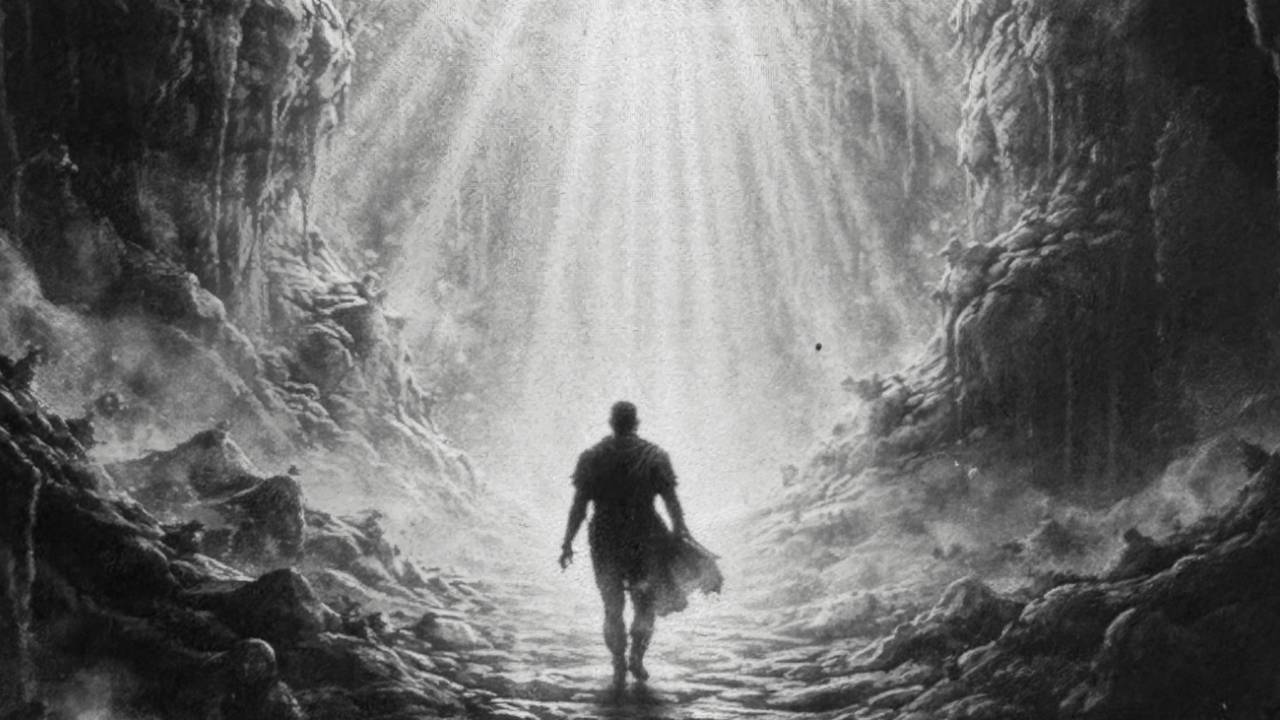
Yesterday, I went to see the movie Hamnet. Early in the film, when Shakespeare first meets his future wife, she refuses to tell him her name and instead asks him to tell her a story. He chooses the myth of Orpheus and Eurydice.
Orpheus, a brilliant musician, loses his beloved wife, Eurydice, shortly after their wedding when she is killed by a viper. Overcome with grief, Orpheus journeys to the underworld, where his music softens even Hades. He is granted permission to lead Eurydice back to the world of the living on one condition: he must walk ahead of her and never look back to confirm she is following until they reach the surface. As they near the light, unable to hear her footsteps and overtaken by doubt, Orpheus turns. In that instant, Eurydice vanishes, lost to the underworld forever.
This myth holds a painful paradox. Looking back can feel like our undoing. But never looking back can leave us wondering whether the journey meant anything at all.
The story is often told as a failure of trust. Orpheus doubted, and doubt cost him everything. But the deeper truth is more uncomfortable. Orpheus did not fail because he was weak. He failed because he was human. Looking back did undo him. But not looking back would have undone something just as essential.
Eurydice does not disappear because Orpheus fails to love her. She disappears because love alone cannot carry the past into the future unchanged. The underworld does not give back what it once required unless we are willing to release the version of ourselves that was shaped there.
This is where our life mirrors the myth.
We look back not to punish ourselves, but to understand who we became to survive. And when we TRULY look, when we allow ourselves to see what we tolerated, what we normalized, what we silenced, what we carried, we discover something unsettling. The self that survived the underworld is not the self that can walk fully into the future.
Looking back is not a passive act. It changes us.
When we examine our past honestly, we don’t just retrieve memories, we encounter the version of ourselves that adapted to endure. The self who learned how to stay quiet. The self who learned how to belong at a cost. The self who made peace with what should never have been required. That self was not wrong. It was necessary. But that self is not meant to come forward unchanged.
This is why looking back can feel like loss. Not because we lose the past. But because we lose our attachment to who we were within it.
Eurydice’s silence deepens this truth. She does not call out to Orpheus. She does not reassure him. She does not promise she is still there. In her silence, she becomes more than a person. She becomes the past itself. The past does not follow us on demand. It does not explain itself or ask to be rescued. It asks simply to be acknowledged.
We look back to understand the journey. And in doing so, we discover that some part of us cannot come with us. Looking back asks a question we rarely name. Who did I have to become so I could survive?
Her silence also reveals the cost of transformation. Transformation is not additive. It requires release. Something shaped in the underworld cannot come into the light with us unless we are willing to let go of the self that was formed there.
This is the moment every real transition requires
There is always a self we do not plan to lose. Not because it was perfect, but because it carried us. It knew how to survive. It knew the rules. It kept the story moving when stopping felt impossible. It was comfortable. And then one day, it no longer fits
To move forward, we are asked to release the version that believed this was all there was. Not because that self was wrong, but because it has completed its work.
If we refuse this step, we drag the old self forward like an invisible weight. When we honor it, grieve it, then we are free to grow without erasing where we have been. Grieving the old self is not betrayal. It is gratitude. A quiet acknowledgment that says, “You got me this far. I will take it from here.”
The past cannot release us until it has been seen. But it must be seen by the part of us that knows how to return. This is the work of transition. Not forgetting, not obsessing, but learning when we are strong enough to look back, witness, and then keep walking.
In letting go, something essential opens. Not loss, but truth. You were never broken. You were becoming. On a long road that only reveals itself once you pause, turn, and honor the whole journey.
Much love,
Lisa
If you enjoyed this blog and believe someone else might enjoy it as well, please feel free to forward. If this was forwarded to you and you would like to hear more, please sign up below to receive future emails.
Lisa Hamil is a founding member and host for The SOS Collective, an online international women’s recovery and support group. However, this blog and any classes or coaching offered by Lisa Hamil LLC are separate from and not affiliated in any way with The SOS Collective.
Stay connected with news and updates!
Join our mailing list to receive the latest news and updates from our team.
Don't worry, your information will not be shared.
We hate SPAM. We will never sell your information, for any reason.
