
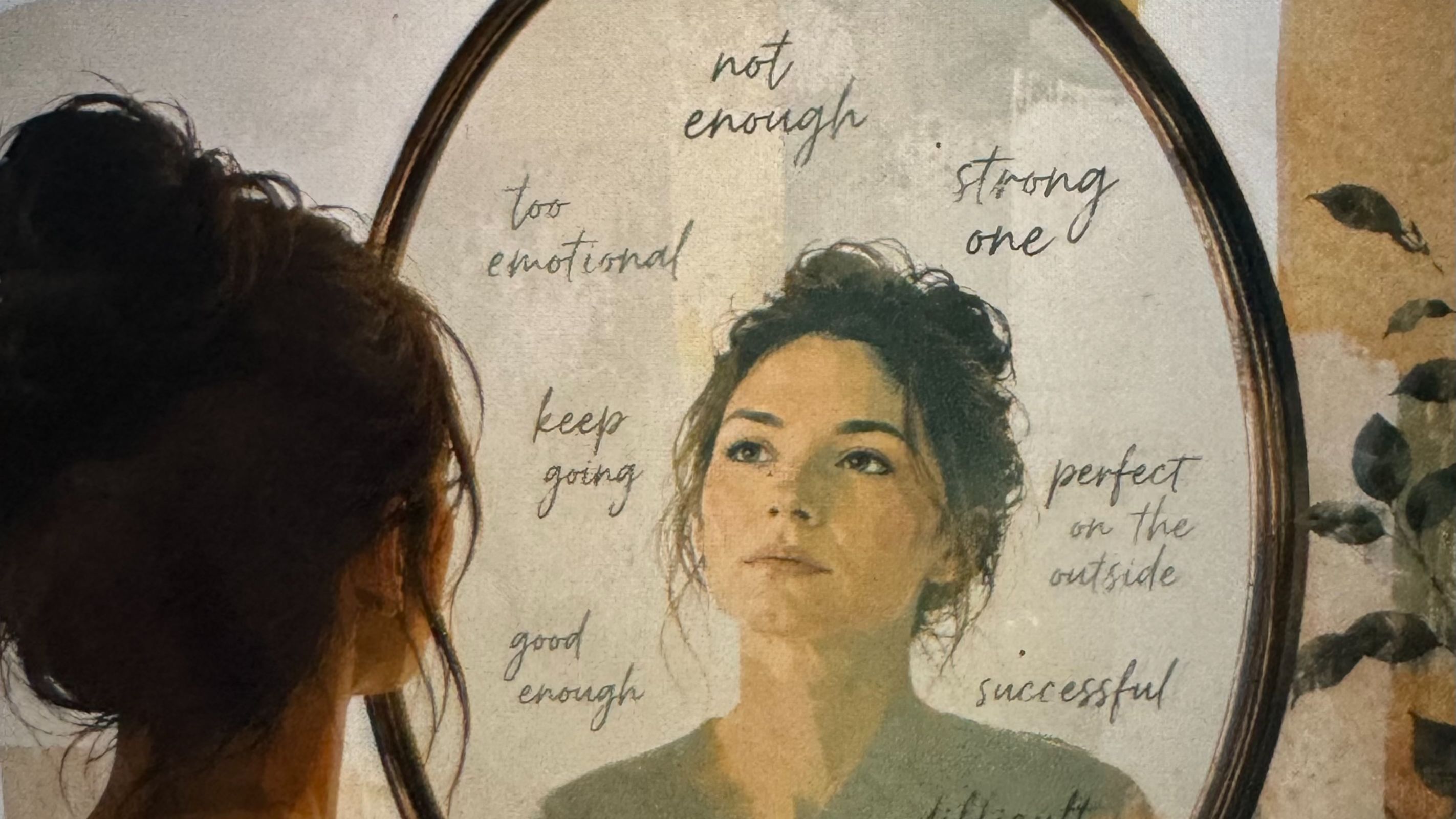
“We tell ourselves stories in order to live.”
--Joan Didion
Most people reading a headline with the word “drunk” in it feel the pull immediately. It’s almost instinctual. Like slowing down to look at a car accident. We are drawn to the dramatic, the visible, the concerning. We want to see where things went wrong. We want to understand the damage. We look for the moment of impact.
But what if the most important word in this blog title isn’t drunk. Maybe it is the word you didn’t even notice. Story.
I have had many labels in my life. Daughter, mother, wife, even “landman” (and no it is NOTHING like the television series). Yet long before any of my more destructive labels entered my life, like alcoholic, addict, or simply broken, I had already been living inside a well-crafted personal story. And if I am honest, I was often more addicted to my story than I was to any substance. My story was my reason for self-abuse. Self-sabotage was the punishment I administered every day for not living up to the story I had cobbled together so carefully. One that I said was mine, but one which had many parts handed to me by others.
That doesn’t mean addiction isn’t real. My story doesn’t dismiss the physical, emotional, or psychological grip it can have. But the word alcoholic kept me from recognizing myself for years. I had a picture in my mind. A stereotype. A societal narrative, that didn’t match the one I was living. So, I excluded myself from that story entirely. And that exclusion became part of my story.
Then I heard a different perspective on “addiction.” What if addiction is anything, or anyone, that impacts your life daily in a negative way, yet, no matter how much harm it is causing, you cannot stop. It is the thing that you wake up to every morning and state, “Not again. Not today.” And find yourself engaging in anyway despite your best efforts.
“I am not a drunk” was the story in my head, but my narrative did not match my actions. Our stories are formed by what we repeat. What we allow. What we normalize. Not just substances. Patterns. Relationships. Thoughts. Roles we play. Expectations we carry. The need to please. The drive to achieve. The belief that we must be everything for everyone except ourselves. And even that definition becomes part of the story.
Because once we name something, we begin to either see ourselves in it…or distance ourselves from it.
For a long time, I knew I had a problem. I just didn’t tell the truth about it. And when you know something, but refuse to acknowledge it, you create a quiet internal tension. A split between who you are and who you are willing to admit you are. And that tension? It becomes fuel. For coping, numbing, for staying exactly where you are. Stuck in comfortable.
Because if you don’t fully see it, you don’t have to change it.
Here’s a truth we don’t talk about enough. We cannot change what we dismiss or what we blame on others. We cannot change what we refuse to acknowledge. And most of us are incredibly skilled at protecting our story. We defend it. Justify it. Repeat it.
It’s estimated we have around 70,000 thoughts a day. Up to 90% of them are the same thoughts we had yesterday. Which means, for most of us, we are not living new lives. We are living rehearsed ones. Reinforced ones. Stories on repeat. And over time, those stories don’t just describe us, they define us.
“I have always been this way.”
“This is just how I handle stress.”
“This is what I learned growing up.”
“This is what people expect of me.”
And maybe those things are true. But they are not the WHOLE truth. There is another part of the story. The part we often overlook.
We have survived 100% of everything that has ever come our way. How? Not by accident. Not by chance. But because somewhere along the way, we learned how to adapt, to cope, to become strong. The problem is the ways we learned to survive don’t always serve us when we’re trying to live. What once protected us is most likely the thing that now confines us.
And if we don’t examine that, we pass it on. To our children. To our relationships. To the people watching us more closely than we realize. Generational patterns don’t repeat because we intend them to. They repeat because we don’t question them. If you want your child’s life to look different, you must look at what you are modeling. Not just what you say, but what you do. What you tolerate. What you avoid. What you believe about yourself.
The people you love, your children, your partners, your friends, are learning your story…even if you’ve never said it out loud. And so are you. Every single day.
We teach people how to treat us. Like it or not. If we are not treating ourselves with honesty, with care, with respect…. why would we expect anyone else to treat us differently? We wait for others to see us. To understand us. To meet unknown needs we haven’t even acknowledged ourselves. But awareness doesn’t come from being seen by others. It comes from seeing yourself.
This isn’t an article about addiction. It is an article about awareness. About noticing the story living inside of you. About asking where it came from. About questioning the parts that no longer serve you. Because labels, like addiction, whether to substances, behaviors, or beliefs, are not the beginning of the story. And it’s not the end of it either. It’s a chapter. One that points back to something deeper. Something quieter. Something more foundational.
Your story is not meant to trap you. It is meant to reveal you. To show you where you have been. What you have carried. What you have learned. And ultimately, to ask you one simple question, “Who do you want to become?”
However, our story cannot teach us anything if we do not learn to look at it through the lens of curiosity. Not shame or judgment or guilt. But genuine wonder at how we have gotten “here” and where do we want to go now.
Addiction is not anyone’s whole story. It has been a large part of my story, but there is so much more. Sobriety is not the whole story either. The foundation of your story, the part that matters most, is not what happened to you. It’s what you choose next. And that choice doesn’t start with fixing everything. It starts with seeing. With awareness. With curiosity. We cannot change what we don’t acknowledge.
See the patterns. Notice the repetition. Pay attention to the places where you have been living on default. And then, slowly…intentionally…begin to write something different. Not based on who you’ve been told to be. But based on who you were before the world told you who to become. Moving from someone who shows up as instructed, into remembering your authentic self. Nurture habits, beliefs, routines, people, thoughts and ideas that feel true. Natural. Whole. If we are always telling ourselves a story, maybe we should tell one that feels real.
Joan Didion said it simply: “We tell ourselves stories in order to live.”
If that’s true, then the real question becomes: What story are you living? And is it time to change it?
Much love,
Lisa
If you enjoyed this blog and believe someone else might enjoy it as well, please feel free to forward. If this was forwarded to you and you would like to hear more, please sign up below to receive future emails.
Lisa Hamil is a founding member and host for The SOS Collective, an online international women’s recovery and support group. However, this blog and any classes or coaching offered by Lisa Hamil LLC are separate from and not affiliated in any way with The SOS Collective.
Stay connected with news and updates!
Join our mailing list to receive the latest news and updates from our team.
Don't worry, your information will not be shared.
We hate SPAM. We will never sell your information, for any reason.
